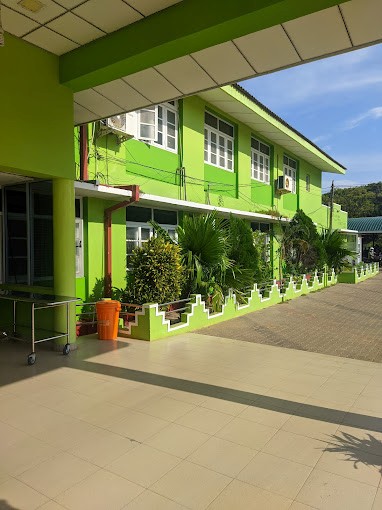
Providing a Sustainable Hot Water Solution for Pallekele Ayurveda Hospital
Background
Pallekele Central Province Ayurveda Hospital is the leading Ayurveda hospital in the Central Province, providing treatment to both admitted patients and daily visitors. The hospital has 150 beds, with around 100–125 residential patients. Hot water is essential for patient care, including bathing, cleaning, and the preparation of medicinal decoctions.
Challenge
Currently, the hospital relies on electrical hot water boilers, resulting in high electricity consumption and costs. Within the given budget, the hospital is unable to provide hot water as required for patients. Additionally, for decoction (Mahakashaya) preparation, 40 liters of hot water is needed, while smaller decoctions 125 (Sulukashaya) are made using firewood. The hospital spends Rs. 15,000 per month on firewood and Rs. 37,500 on gas. Moreover, the hospital requires an estimated 250 liters of hot water daily for patient bathing and cleaning. However, with the current hot water boilers, providing this amount of hot water within the given budget is not feasible due to high operational costs, leaving this requirement unmet.
Solution
A biomass-fired hot water heater, already used successfully in several hospitals and restaurants, presents a practical and cost-effective solution. The hospital’s kitchen produces approximately 10 kg of coconut shells daily, which can be used as a renewable fuel source for the heater. By switching to this system, the hospital can meet its hot water needs efficiently while staying within budget. This solution will significantly reduce reliance on expensive electricity and gas, lower operational costs, and promote environmentally friendly energy practices.